Finding the Light
This article originally appeared in Mom to Mom Magazine, a Send Media Company publication.
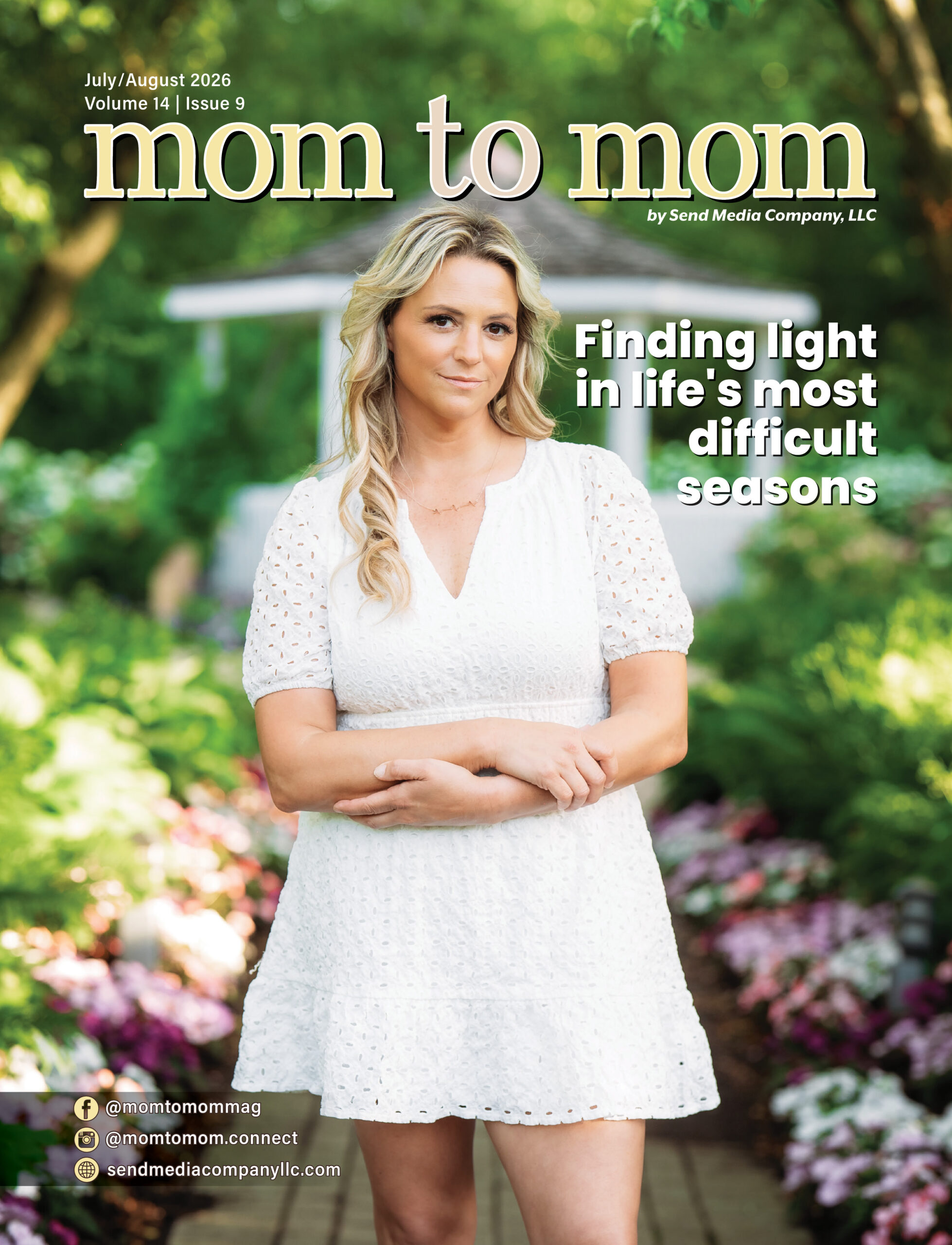
Photography: Nicole Vadas Photography
Hair and makeup: Clawdia’s Beauty Salon
For years, Jen Laga's family had a saying.
"4 Friends 4 Ever."
The four friends were Jen, her husband Corey, and their two children.
It was more than a slogan. It was a reflection of how they lived.
The family traveled together, hosted holidays together, played sports together, and spent weekends tackling projects around the house. After moving from Illinois to Northwest Indiana, they built a home in Chesterton, Ind., and quickly found a community they loved.
"We are a very closely bonded family who does virtually everything together," Jen said.
Corey was often at the center of whatever adventure came next.
He coached youth football. He helped the children develop their athletic skills. He built a treehouse complete with electricity and transformed spaces inside and outside their home into gathering places for family and friends. Even after long workdays, he found time to help with dinner, household projects, and the countless responsibilities that come with raising a family.
Jen describes him as outgoing, hardworking, funny, and deeply devoted to the people he loved.
"He was my teammate, my soulmate," she said. "We walked hand in hand in every decision."
The family had traditions that reflected their gratitude for the life they were building together. One of their favorites was a Happy Jar. Throughout the year, family members would write down things they were thankful for and place them inside. Every New Year's Day, they would gather and read the notes together.
Looking back, Jen remembers a family that genuinely enjoyed being together.
"We traveled often," she said. "There was very little we didn't do together."
One summer day nearly two years ago started much like countless others.
Jen and the children planned to spend the day at the county fair while Corey attended a union meeting in Illinois. Before heading in different directions, they talked on the phone.
"He told us to have a good time and we told him to do the same," Jen said. "We all said, 'I love you.'"
Hours later, police officers arrived at her front door.
"The police rang the bell," Jen recalled. "They asked if anyone else was home. I explained the kids were there, and they said it was best we step outside."
Corey had been killed in a high-impact car accident. He was 36-years-old.
"I refused to believe what I was hearing," Jen said. "I just kept saying, 'There's no way. Nothing bad happens to Corey.'"
The loss came only months after the unexpected death of her brother.
"It was too much," she said. "Now my best friend, my soulmate, just ripped out of our lives just like that. How could this be?"
At the time, her son was 11 and her daughter was 9.
One of the first thoughts that entered her mind was how she would tell them.
"I was now thinking about them," she said. "How do I tell them this news? What's going to happen to them? Will they be okay?"
She sat both children down in the living room and explained that their father had been in an accident and had died.
"My daughter gasped, and my son stared in disbelief," she said.
The three sat together, trying to process what had happened.
"There was so much silence," Jen said. "So much confusion. I didn't have any answers to share."
The weeks that followed were difficult in ways Jen said she never could have imagined.
She struggled to eat. She struggled to sleep. She found herself staring out the window, convinced every car might somehow be Corey returning home.
"The first few weeks were absolutely surreal," she said. "I continued to have out-of-body experiences for weeks. I thought this was a joke. I convinced myself he was returning, waiting for him to call or text."
Friends delivered meals. Family members filled the house. People showed up in ways she will never forget.
"The amount of support was immense," she said.
Yet even surrounded by people who loved her, Jen was forced to navigate decisions she never expected to make alone.
"There was no will, no wishes," she said. "All big decisions had to be made and I didn't have Corey to help me make any."
Today, it is one of the lessons she shares most often with other families.
"I tell others all the time: please learn from me and have those conversations now," she said. "Don't wait."
Jen hopes others will see her story as a reminder that difficult conversations are acts of love.
No one wants to discuss funeral wishes, legal documents, or worst-case scenarios. Yet when tragedy strikes, those decisions do not disappear. They become part of the burden carried by the people left behind.
"I learned the hardest way possible how unprepared we were as a family," she said.
While grief is often discussed in emotional terms, Jen said one of the biggest surprises was the number of responsibilities that suddenly fell on her shoulders.
People understood she was grieving, she said, but many did not realize how much daily life changed.
"Everything falls on the surviving spouse," she said. "Not only are you now solely raising the kids, but you also face the growing daily grind: bills, house maintenance, sole decision-making, financial duties, legal matters, healthcare needs, education, logistics, sports, and long-term planning."
There was also the loss of the everyday moments many people take for granted. The inside jokes, shared memories, nicknames, and stories that only two people know suddenly belonged to one person.
"The inside jokes, the stories, the nicknames, and the memories we created together make isolation feel that much worse," she said.
As she navigated her own grief, Jen was also helping two children navigate the loss of their father.
She made a conscious decision not to hide what she was experiencing.
"I did not hide my crying," she said. "I did not hide panic attacks."
Instead, she wanted her children to understand that grief could be expressed openly and honestly.
"It would have been a mistake to let the kids think I am just fine," she said. "I felt it was good for them to see what healing can look like."
The family sought support through counseling and grief resources, including The Phoenix Center for Grief in Valparaiso, Ind. They stayed active in sports, school, and activities. Jen focused on maintaining routines while creating space for difficult conversations.
One comment, however, continues to stand out.
People would occasionally tell her son to "be the man of the house."
While she understands the intention behind those words, Jen strongly disagrees.
"He was just 11 years old," she said. "Sadly, I believe this steals away his right to be a child and to grieve properly."
Instead, she wanted both children to have permission to experience their grief without carrying responsibilities beyond their years.
Today, memories of Corey remain woven throughout their home and daily lives.
One of the family's most meaningful traditions is something they call Topic Time.
Each evening, the family gathers and talks about Corey.
"It's an open floor to discuss anything and ask any questions," Jen said. "There is no right or wrong, just sitting with our emotions and working through them together."
The family also created "Dad Shelves" throughout the house where they display items that remind them of Corey. There are pillows featuring his image, photo books documenting family memories, shadow boxes filled with personal belongings, and a birthday jar where family members write letters to him each year.
The basement walls still display photo boards from Corey's celebration of life. His hats are displayed on a memorial wall. His gym shoes are now being worn by his son.
"We talk about him all the time," Jen said.
As difficult as the past two years have been, Jen said she has learned things about herself she never expected.
"My initial thoughts were all, 'No way can I do this. I can't go on. I can't find joy again,'" she said.
Over time, those thoughts began to change.
"Today, I am so proud of myself," she said. "I am realizing that vulnerability is not weakness."
One of the most important lessons she has learned is that grief and joy can exist at the same time.
"I want people to understand that carrying grief and seeking joy are not mutually exclusive," she said. "They can coexist."
That realization did not happen overnight. It came through counseling, support, difficult conversations, watching her children continue to grow, and recognizing small victories along the way.
"Just getting out of the house was a victory at one point," she said.
Today, Jen is creating new traditions with her children while honoring the old ones. She is trying new hobbies, traveling more, and allowing herself to embrace experiences she once thought would never be possible again.
She is also finding purpose in helping others.
Over the past two years, she has connected with other widows and grieving spouses who understand the unique challenges that come with loss. Those relationships became a source of support during some of her darkest moments.
Now she hopes to create opportunities for others to find that same connection through gatherings and conversations with people who understand the journey.
"My goal is to make grief more comfortable for people," she said. "Let's talk about it. Let's talk about him. Let's remember, let's laugh, let's cry."
If her children read this story years from now, Jen said she hopes they remember the strength they showed during one of the most difficult seasons of their lives.
"I am so proud of our bond as a family," she said. "Even through the deepest loss, we worked together as a team to find the light again."
She hopes they remember that healing did not mean forgetting.
It meant carrying love forward.
Nearly two years after losing Corey, Jen still misses her husband every day. She still wishes she could pick up the phone and hear his voice. She still finds herself reflecting on the future they planned together.
At the same time, she believes Corey would want their family to continue living fully.
"Always be the best you can be," he often told them.
Today, those words remain part of the foundation he helped build.
The family's slogan remains, too.
"4 Friends 4 Ever."
The family may look different today than it did nearly two years ago, but the foundation remains the same: love, resilience, and the belief that even in the darkest seasons, it is possible to find the light.
This article originally appeared in Mom to Mom Magazine, published by Send Media Company. To learn more about Mom to Mom Magazine, Woman to Woman Magazine and Send Media Company, visit sendmediacompanyllc.com or contact nichole@sendmediacompanyllc.com.